Image Source: iStock/BestForBest
Old devices rarely get much attention once they leave the desk. They are packed, stored, or passed on, and the assumption is that whatever was on them is no longer a concern. In reality, that is often the point where risk quietly builds.
A report by IBM places the average cost of a data breach at $4.45 million, with poor data handling practices playing a consistent role. Disposal is part of that picture, even if it is treated as a routine task.
This article looks at what happens at that final stage. It covers how regulations such as GDPR, HIPAA, and SOC 2 apply when devices reach end of life and what businesses are expected to do to ensure data is not just removed but rendered irretrievable and properly documented.
Why End-of-Life Devices Are a Compliance Risk
The gap is not technical. It is an assumption. Many businesses believe that deleting files or resetting a device is enough, but it is not. Data often remains intact beneath the surface, and recovery tools can bring it back with little effort. Studies show that a large share of second-hand drives still contain recoverable information, which means disposal does not equal deletion in any practical sense.
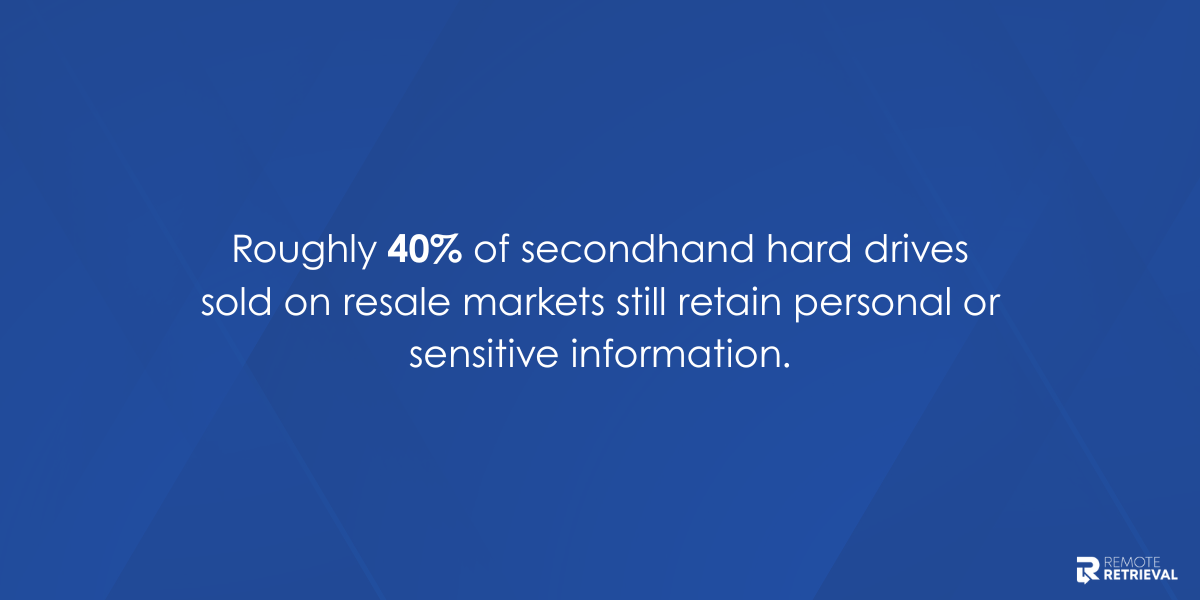
The scale of the problem is easy to miss. Around 40% of used hard drives sold on secondary markets still contain personal or sensitive data. At the same time, about 30% of IT assets go untracked during disposal, including overlooked equipment like printers, network devices, and backup media. These are not edge cases. They are routine oversights.
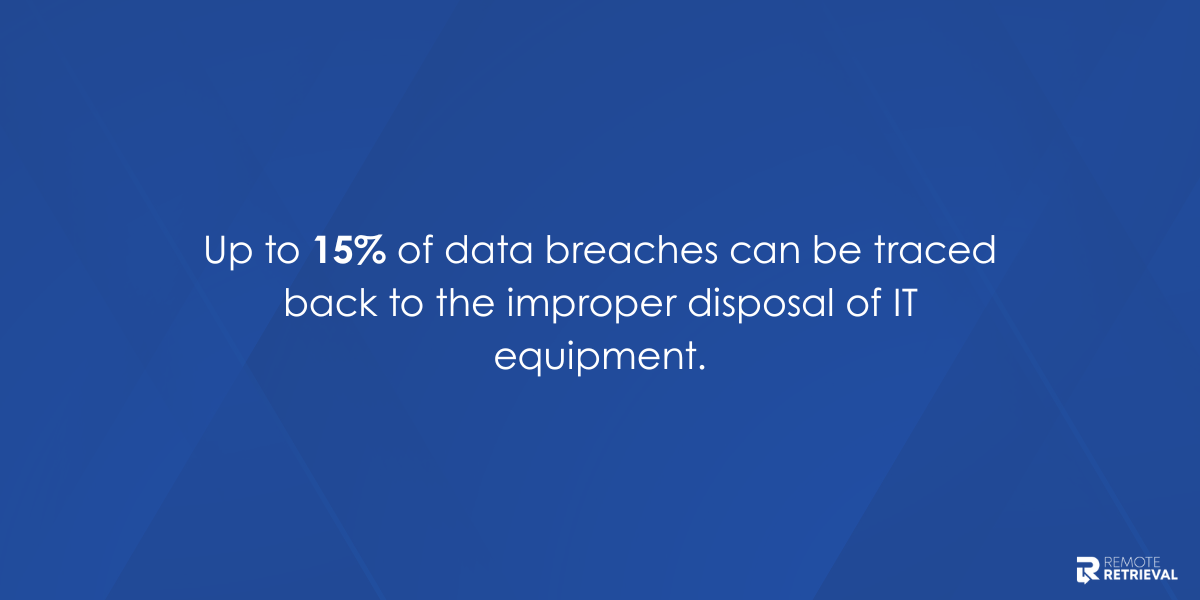
What makes this more serious is how regulators view it. Disposal is not treated as a separate activity. It is part of the data lifecycle. If information is exposed at this stage, it is handled the same way as any other breach. In fact, up to 15% of data breaches are linked to improper disposal of IT equipment.
That is where many organizations get caught off guard. The systems may be retired, but the responsibility is not.
The Shared Compliance Foundation (Across All Frameworks)
Before looking at individual regulations, it helps to understand the common ground they all stand on. Whether it is GDPR, HIPAA, or SOC 2, the expectations around end-of-life devices follow a similar pattern. The focus is not just on removing data, but on being able to account for it at every stage.
• Asset Tracking and Inventory Control

Image Source: iStock/BestForBest
You cannot secure what you cannot see. A clear, updated inventory of all data-bearing devices is the starting point. This includes obvious assets like laptops and servers, but also less visible ones such as printers, backup drives, and network equipment. Without accurate tracking, devices slip through the process unnoticed, which is often where exposure begins.
• Data Classification Before Disposal

Image Source: iStock/BestForBest
Not every device carries the same level of risk. Some may hold routine operational data, while others store personal, financial, or health information. Classifying data before disposal helps determine the level of care required. High-risk data calls for stricter handling and often stronger destruction methods.
• Secure Data Sanitization (Logical or Physical)
Image Source: iStock/BestForBest
Once the data is identified, it needs to be removed in a way that leaves no room for recovery. This is where secure data destruction becomes critical. Logical methods include overwriting or degaussing, while physical methods involve shredding or crushing the storage media. The choice depends on the sensitivity of the data and the condition of the device.
• Chain of Custody Documentation

Image Source: iStock/BestForBest
From the moment a device is taken out of service to the point it is destroyed, every step should be recorded. A secure chain of custody ensures there is a clear record of who handled the asset, where it was stored, and how it moved through the process. This reduces the risk of loss, theft, or unauthorized access along the way.
• Verified Destruction with Formal Records
Image Source: iStock/BestForBest
The final step is proof. It is not enough to say that a device was wiped or destroyed. Organizations are expected to maintain formal records, often in the form of certificates of destruction that include asset details such as serial numbers. These records serve as evidence during audits or investigations.
A widely accepted benchmark for these practices is NIST SP 800-88. It outlines clear methods for clearing, purging, and destroying data, and is often used as a reference point when demonstrating that proper procedures were followed.
GDPR: Data Responsibility Does Not End at Disposal
Image Source: iStock/cnythzl
Under the General Data Protection Regulation, responsibility for personal data does not end when a device is taken out of use. The regulation applies to the full lifecycle of data, including handling at the point of disposal. If personal data is exposed at this stage, the organization that collected it is still held accountable.
• Data Lifecycle Responsibility
GDPR makes it clear that data protection is not limited to active systems. Devices that are no longer in use can still contain personal data, and that data must be managed with the same level of care. An effective IT asset recovery plan helps ensure that retired devices are identified, processed, and handled in a controlled way rather than being overlooked.
• Right to Erasure and Disposal
Article 17, commonly known as the “right to be forgotten,” requires organizations to delete personal data when requested. This obligation extends beyond live databases. If that same data remains on old hardware, the requirement has not been fulfilled. Proper disposal must ensure that the data is permanently removed and cannot be reconstructed.
• Storage Limitation and Timely Decommissioning
GDPR also requires organizations to avoid holding personal data longer than necessary. Keeping unused devices with intact data creates unnecessary exposure. Timely decommissioning, paired with secure data removal, supports compliance with this principle.
• Third-Party Vendors as Data Processors
When disposal is handled by an external vendor, GDPR treats that vendor as a data processor. A formal agreement must define how data will be handled and destroyed. Even when the task is outsourced, responsibility does not shift away from the organization that controls the data.
• Documented Proof of Destruction
Accountability under GDPR depends on evidence. Organizations are expected to maintain records that show how data was destroyed, when it happened, and which assets were involved. Certificates of destruction and detailed logs are often required during audits or investigations.
Key takeaway: If data resurfaces from a retired device, it is treated as a failure in data protection. The organization remains responsible, regardless of where or how the disposal took place.
HIPAA: Strict Control Over ePHI at Every Stage
Image Source: iStock/Oleksandr Hruts
When it comes to HIPAA, the stakes are higher by design. Health data is deeply personal, and any exposure can carry legal, financial, and ethical consequences. Devices that store or process this information must be handled with care at every stage, including when they are retired.
• What Qualifies as ePHI on Devices
Electronic protected health information, or ePHI, includes any patient-related data stored or transmitted in digital form. This can range from medical records and billing details to appointment histories and diagnostic reports. If a device has ever handled this kind of information, it falls within HIPAA’s scope, even if it is no longer in active use.
• Device and Media Control Requirements
HIPAA requires clear policies for how devices and media are managed throughout their lifecycle. This includes procedures for the disposal, reuse, and movement of hardware. Organizations are expected to track devices, control access, and ensure that ePHI is not exposed during transitions such as decommissioning or transfer.
• Obligation to Make Data Completely Unrecoverable
It is not enough to delete files or perform a basic reset. HIPAA requires that ePHI be rendered unrecoverable. This often means using advanced wiping methods or physical destruction to ensure that data cannot be reconstructed. Failing to meet this standard can lead to serious violations, including risking costly data breaches and even domestic vs international retrieval scenarios where data resurfaces beyond controlled environments.
• Often Overlooked Devices
One of the common gaps in compliance is the range of devices involved. Beyond computers and servers, equipment such as photocopiers, fax machines, and certain medical devices often contain internal storage. These are frequently missed during disposal, even though they may hold sensitive patient data.
• Role of Business Associate Agreements (BAAs)
If an organization uses a third-party vendor to handle device disposal, HIPAA requires a Business Associate Agreement. This contract ensures that the vendor follows the same standards for protecting ePHI. It defines responsibilities, safeguards, and accountability during the disposal process.
Key takeaway: Any device that has handled patient data must be treated as high-risk. Its size or function does not reduce its responsibility under HIPAA.
SOC 2: Proving You Did It Right
Image Source: iStock/RedVector
Unlike some compliance frameworks that focus mainly on rules, SOC 2 is built around evidence. It is not only about whether controls exist, but whether they can be demonstrated clearly during an audit.
• Trust Services Criteria
SOC 2 is based on five trust services criteria, but for end-of-life devices, the most relevant are security, confidentiality, and privacy. These principles require organizations to ensure sensitive data is protected not just in active systems, but also when it is being removed or destroyed.
-
• Logical Wiping vs Physical Destruction
SOC 2 auditors expect clarity on how data is handled at disposal. Logical wiping involves overwriting data so it cannot be recovered through normal means, while physical destruction removes the storage medium entirely through shredding or crushing. The method chosen should match the sensitivity of the data and be consistent with documented policy.
-
• Importance of Audit Trails and Logs
Evidence matters as much as action. Every step in the disposal process should leave a traceable record. This includes who handled the device, when it was transferred, and how it was processed. Without a clear audit trail, even properly destroyed data can become a compliance issue.
-
• Documentation Expected During SOC 2 Audits
During audits, organizations are expected to present structured documentation. This typically includes chain of custody records, destruction certificates, asset registers, and internal policy documents. The goal is to show that disposal is not handled informally, but through a controlled process.
-
• Ongoing Monitoring, Not One-Time Disposal
SOC 2 does not treat disposal as a single event. Controls must remain active over time. That means regularly reviewing asset inventories, verifying vendor performance, and ensuring procedures are followed consistently across all devices leaving the organization.
Key takeaway: It is not enough to destroy data. You must prove, document, and demonstrate it in a way that stands up to audit scrutiny.
How These Compliance Rules Compare in Practice
GDPR, HIPAA, and SOC 2 all approach data protection from slightly different angles, but when it comes to end-of-life devices, they start to look surprisingly similar. Each one is concerned with the same core problem: data that quietly survives after a device is no longer in use.
The difference is mostly in emphasis. One framework focuses on individual rights, another on sensitive health data, and the third on providing control through audits. But in practice, they all land on the same expectation.
|
Area |
GDPR |
HIPAA |
SOC 2 |
|
Focus |
Personal data protection across full lifecycle |
Protection of electronic health data (ePHI) |
Proof of secure controls and audit readiness |
|
What must be protected |
Any personal data on devices |
Patient-related health information |
Sensitive and confidential business data |
|
End-of-life expectation |
Data must be permanently erased before disposal |
ePHI must be fully unrecoverable from devices |
Disposal process must be provable with evidence |
|
Key requirement |
Right to erasure + storage limitation |
Device/media controls and full sanitization |
Documented controls and audit trails |
|
Third-party role |
Data processors under formal agreements |
Business Associates (BAAs required) |
Vendors included in control environment |
|
Proof required |
Certificates of destruction + logs |
Sanitization records + compliance documentation |
Audit trails, logs, and destruction evidence |
|
Risk if ignored |
Regulatory fines + breach liability |
HIPAA violation + breach notification penalties |
Failed audit + loss of compliance certification |
The Role of Certified ITAD Vendors
At some point, most organizations realize that DIY device disposal is harder to control than it looks. What starts as a routine IT task can quickly turn into gaps in tracking, inconsistent wiping methods, or missing records when audits come around.
Why Internal Disposal Is Risky
Internal teams are usually focused on keeping systems running, not managing end-of-life processes in detail. Devices get stored in different locations, wiped using different methods, or passed between departments without clear documentation. Over time, this creates weak points in accountability. When something goes wrong, it is often difficult to reconstruct what actually happened.
Certifications like R2 and e-Stewards
This is where certified IT asset disposition providers become important. Standards such as the R2 Standard and the e-Stewards Standard set strict requirements for environmental safety, data security, and process control. Vendors that follow these standards are independently audited, which adds a layer of trust that internal processes often cannot match.
What to Expect from a Reliable Vendor
A dependable ITAD partner should offer a clear, documented process from collection to final destruction. This includes secure handling during transport, verified data sanitization methods, and consistent reporting at each stage. Communication should be structured, not informal, with updates that show where assets are and how they are being processed.
Certificates of Destruction and Traceability
One of the most important outputs of the process is the certificate of destruction. This document confirms that specific assets were securely processed and includes identifiers like serial numbers. Combined with full traceability records, it creates a verifiable history of what happened to each device, which becomes critical during audits or compliance reviews.
Closing Perspective: Compliance Doesn’t End with Use
End-of-life devices sit at a point where compliance becomes very real. GDPR, HIPAA, and SOC 2 may differ in scope, but they all expect the same outcome: data must be fully removed, properly controlled, and clearly documented before a device leaves the organization. Gaps at this stage are rarely technical; they are procedural.
When disposal is treated as part of the data lifecycle, not an afterthought, organizations reduce exposure and stay in a stronger position during audits, investigations, and reviews.