
You think being nice during offboarding is harmless. A friendly goodbye email, or a warm exit interview, and maybe even a small gift card, and everything’s fine, right? Wrong. Under all the smiles and polite gestures, there is chaos, unseen or probably ignored on purpose.
Company laptops sit on dining tables, monitors collect dust in spare rooms, and sensitive data quietly lingers on devices long after employees have moved on. So what you may think is a nice gesture can quickly turn into hidden costs. But being courteous is not the problem here; when you replace clarity with courtesy, you let go of the accountability.
The Nicety Dilemma
Most companies fall into the trap of equating niceness with efficiency. A polite reminder email, a soft deadline for device return, or a casual “whenever you get a chance” can feel like enough at the moment. Because, afterall, you don’t want to appear demanding or distrustful, and maintaining goodwill is important.
But the problem is that goodwill alone does not ensure action. If you don’t have clear processes, accountability quietly dissolves. In remote teams, where employees may be hundreds or even thousands of miles away, these small gaps compound quickly.
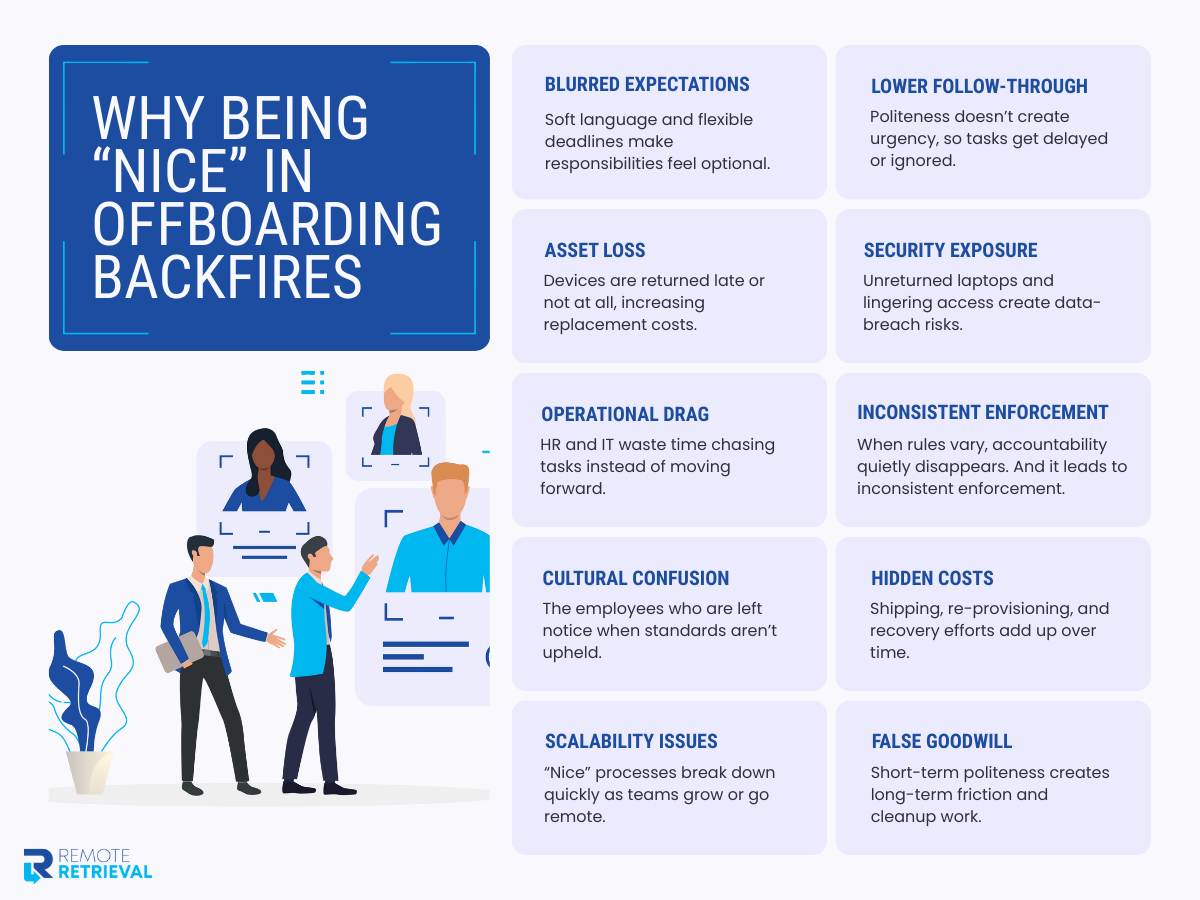
Your friendly gesture can become a hassle as you spend a lot of time with the chain or replacements, security workarounds, and tracking down devices that should have come back to you on their own. 71% of employees don’t return company equipment as per Capterra’s 2022 Employee Offboarding Survey. That statistic alone shows how often “nice” offboarding policies fail in practice.
Hidden Costs Behind Nice Offboarding
Nice offboarding may look harmless on the surface, but the real damage happens behind the scenes. These costs do not appear immediately, which is why they can be easy to ignore. But with the passage of time, they can stack up and begin to affect your daily operations.
1. Lost Or Delayed Devices
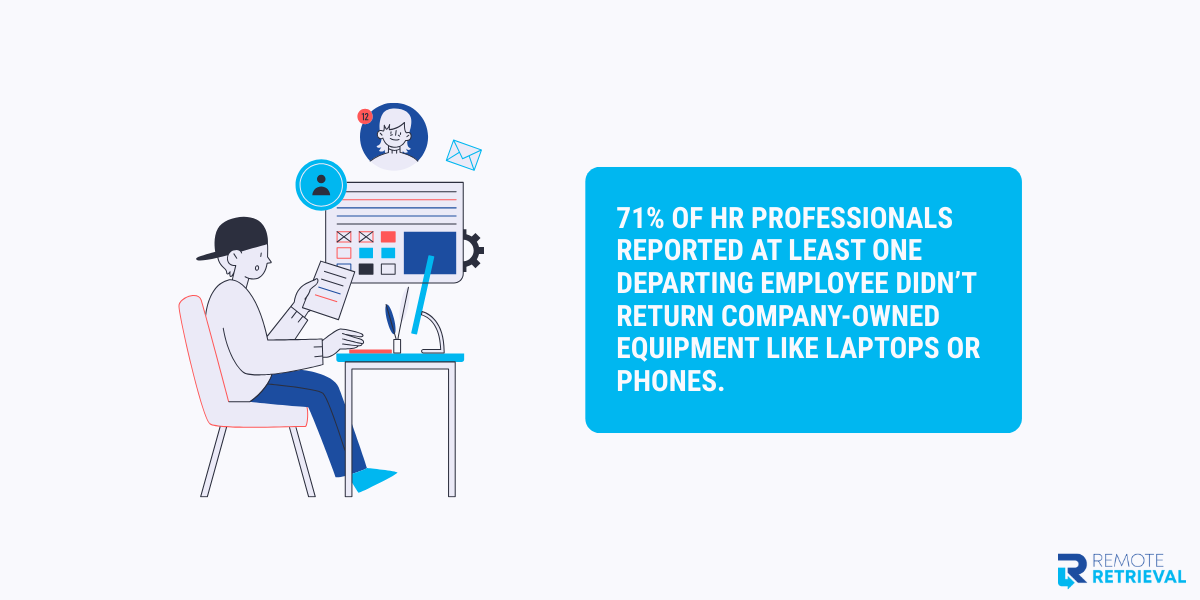
If you base your offboarding on trust rather than proper structure, then your devices will be returned late or not at all. If these laptops never make it back to you, replacing them is the only option left, and it is no longer a hardware expense, but it also includes the shipping costs, the time it took to set up, and the list goes on. All of this could have been avoided with a simple return policy that is clear and accountable.
2. Loss Of Company Culture
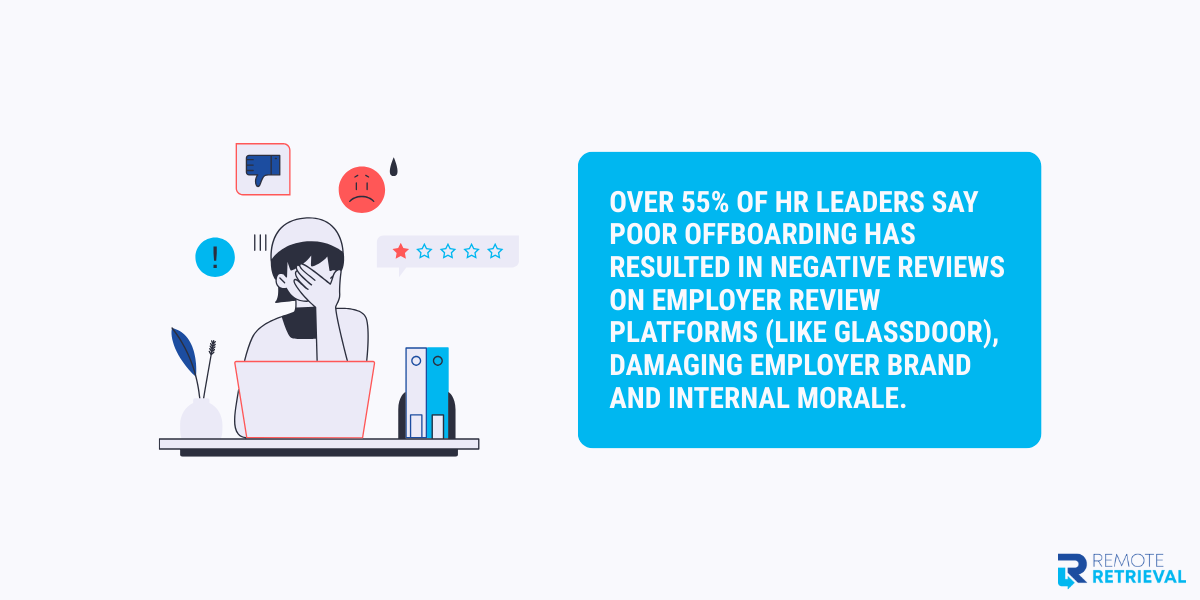
Ironically, overly nice offboarding can damage the culture you’re trying to protect. When the processes are unclear or inconsistently enforced, the employees still on to team notice and this creates confusion. A culture built on clarity and fairness begins to erode when expectations are optional rather than defined.
3. Data Breaches
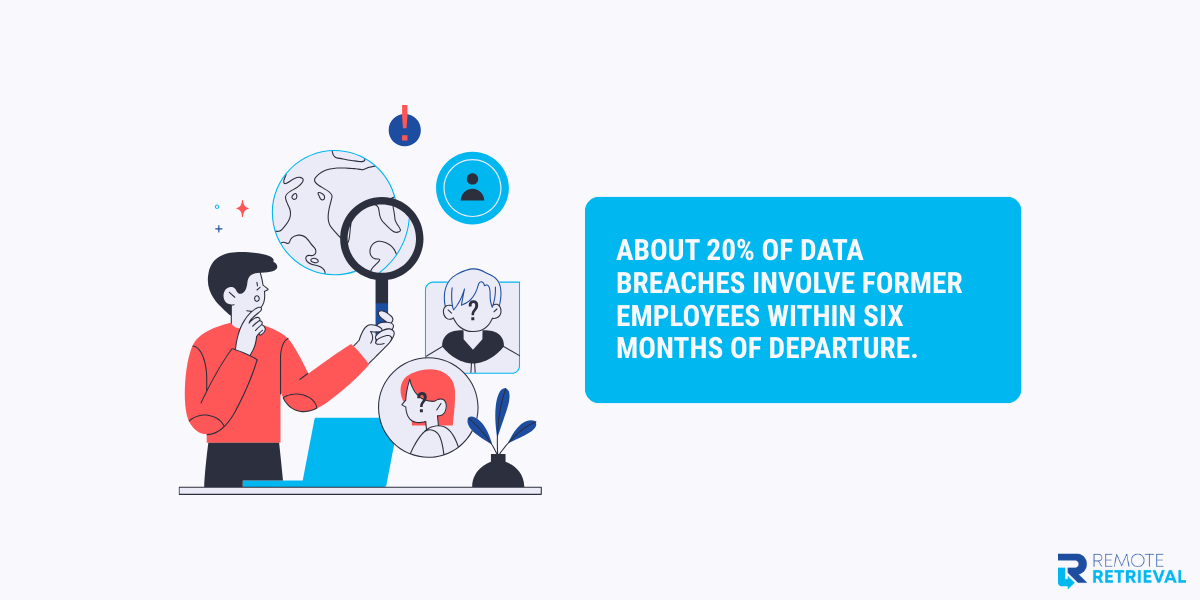
Unreturned or delayed devices go beyond just monetary loss; they are a security risk. Company laptops have a lot of stored data, including credentials, internal documents, and access to sensitive systems. Even if you change the passwords or disable the accounts, the data exposure can still cause problems.
4. Operational Delays
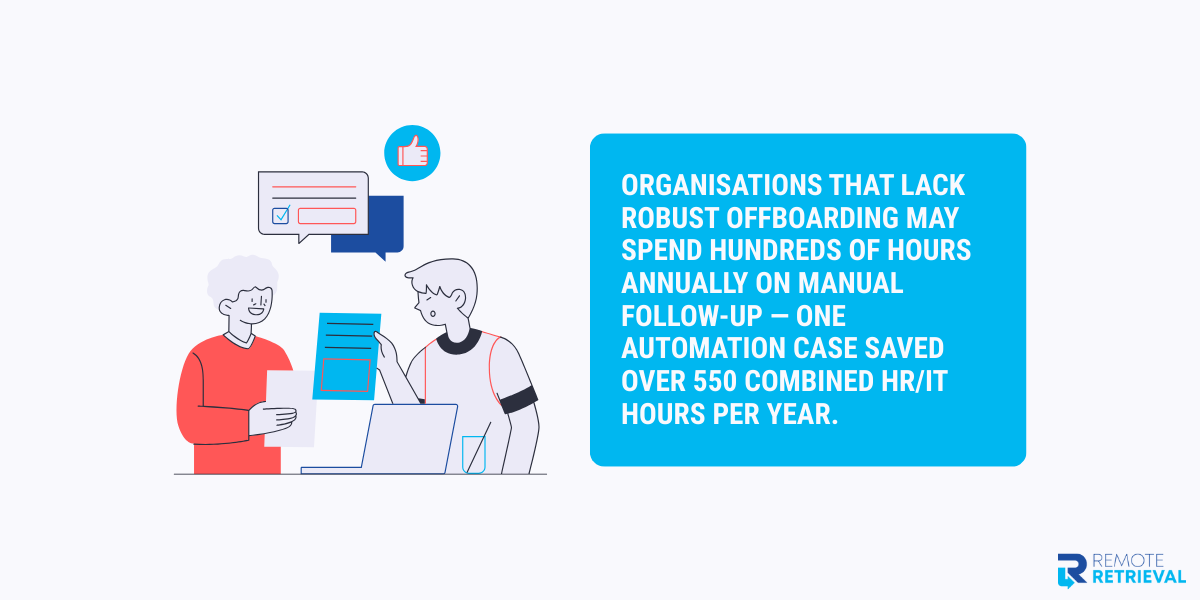
Nice offboarding does not get things done; it shifts the blame and burden to internal teams. Human resource teams spend a lot of energy on repeated follow-ups while IT has to track assets, and this can cause a delay in new hires getting their devices.
Instead of moving forward, the teams end up dealing with problems that should have been resolved the moment an employee exited the office.
Nice Can Mean Lazy
Nice offboarding is rarely intentional negligence, and most of the time it is avoidance disguised as empathy. On the surface, it feels considerate. In practice, it leads to low follow-through.
When there are no deadlines and no consequences, returning company equipment slowly drops down the priority list for someone who has already mentally moved on.
What “Nice” Offboarding Looks Like vs. What It Causes
| What feels nice | What actually happens |
| Polite reminder emails | Device returns get delayed |
| Flexible, open-ended timelines | No sense of urgency |
| No escalation to avoid awkwardness | Issues go unnoticed |
| Trusting employees to handle returns | Assets quietly disappear |
| “We’ll follow up later” | Later becomes never |
There is also a dangerous assumption that employees will return devices voluntarily simply because it is the right thing to do. While most people have good intentions, good intentions do not always translate into action. After a resignation, life moves fast, and new jobs begin, routines change, and returning a laptop becomes an afterthought rather than a responsibility.
Ask Yourself This:
-
Who owns the device and returns it once an employee leaves?
-
What happens if reminders are ignored?
-
When does “being nice” turn into negligence?
-
Is your offboarding process designed for goodwill or outcomes?
If you do not have clear answers for these questions, then the cost is already building.
Save Money And The Company With Structured Offboarding
Unlike what people believe, structured offboarding does not make things more complex but reduces the complexity of it. When companies stop relying on goodwill and start relying on systems, the costs can drop naturally.
• Security First Approach
Security risks tend to surface after an employee has already left, which is why IT involvement must begin early in the offboarding process. Structured offboarding includes data wiping protocols, timely access revocation, and inventory checks that confirm where each device is and what data it holds.
And when IT is looped in from the start, companies can avoid last-minute damage control. Devices are secured, access is removed on time, and sensitive information is protected before it becomes a liability.
• Document Asset Management
Tracking assets should not depend on memory or spreadsheets that are updated “when there’s time.” Structured offboarding relies on documented asset management, where every device is tracked from shipment to return.
Centralized dashboards or inventory tools give teams real-time visibility into who has what and where it is. This makes retrieval faster, reduces replacement costs, and removes guesswork from the process entirely.
• Communication Without Unnecessary Coldness
Firm policies do not have to feel cold. When you communicate expectations clearly and early, there is no need for uncomfortable reminders or awkward follow-ups. Employees know exactly what is required of them, and companies know when action needs to be taken.
This kind of communication reduces risk while preserving goodwill, allowing you to keep offboarding professionals, predictable, and respectful, without turning simple exits into expensive problems.
The Structured Offboarding Reality Check
If you can’t tick these off, your offboarding is probably costing you money.
Device & Asset Control
-
Every issued device is logged and assigned to a specific employee
-
Return deadlines are clearly defined (not “whenever possible”)
-
A return method is decided before the employee’s last day
-
There is an escalation step if a device is not returned on time
Ownership & Accountability
-
HR and IT both have defined roles in the offboarding process
-
One team or person owns device retrieval end-to-end
-
Follow-ups are automated, not dependent on memory or goodwill
Security Safeguards
-
System access is revoked on or before the last working day
-
Data wiping or device lockdown protocols are in place
-
Unreturned devices are treated as security incidents, not admin delays
Communication & Policy
-
Offboarding expectations are shared early, not after resignation
-
Policies are firm, documented, and consistently enforced
-
Employees know exactly what happens if deadlines are missed
Conclusion
Being “nice” during offboarding is not the problem. The problem starts when niceness ultimately replaces structure. Without clear ownership, timelines, and security checks, even the most well-intentioned exits can turn into ongoing tech hazards.
Offboarding should be treated as a defined process, not a courtesy gesture. So when companies invest in clear policies, documented asset management, and early IT involvement, they protect their culture and finances.
For distributed and remote teams in particular, relying on goodwill alone is no longer practical. This is where structured solutions, such as Remote Retrieval, come in; we help close the gap between intent and execution by ensuring devices are recovered on time, and data is secured properly.