
Image Source: iStock/TopVector
There is no single answer for every organization. The better choice depends on return volume, employee locations, internal resources, international requirements, and how much operational work the IT team can realistically manage.
For a small number of employees, an IT team may be able to handle all of this internally. But as a company grows, remote teams become more distributed, or return volumes increase, equipment recovery can take more time than expected.
That raises a practical question: should the IT team continue managing returns itself, or use a laptop return service?
What Does DIY Laptop Retrieval Involve?
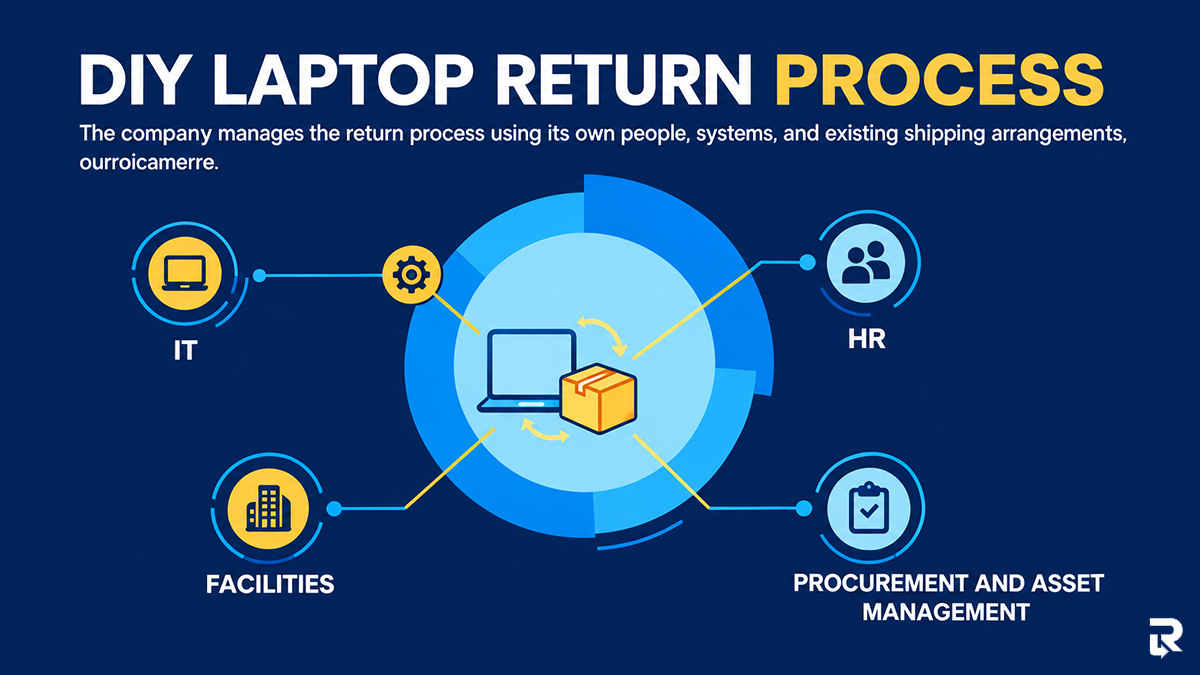
With a DIY approach, the company manages the return process using its own people, systems, and existing shipping arrangements.
Depending on how the organization divides responsibilities, the process may involve:
- IT manager,
- HR onboard/offboarding team,
- Facilities manager
- Procurement department, or
- Asset management
Someone needs to confirm which equipment should come back, arrange the shipment, communicate instructions to the employee, monitor the return, and update internal records.
The company also owns the follow-up when something does not go according to plan. A package may be delayed; an employee may miss a shipping deadline; or the wrong equipment may be returned. These cases have to be handled internally.
DIY can therefore work well when the number of returns is manageable and the organization already has a consistent process in place. The important consideration is not simply whether the IT team can handle returns, but how much ongoing work the process creates and the risks involved in the process of laptop retrieval.
What Does a Laptop Return Service Cover?
An outsourced approach shifts the burden of the day to day return coordination to a specialist.
The provider, rather than relying on internal staff members to process each shipment independently, can provide instructions and packaging, ship, track, and handle employee communication, as per the agreed process.
A laptop retrieval service might additionally take care of exceptions, such as later shipments or employees requiring further follow-up. Specialist coordination can also be beneficial for organizations with staff in multiple countries, who have an additional challenge in international repatriation.
The IT department still controls company policies and assets. The difference there is that many of the logistical items are done by an external team.
DIY vs. Laptop Return Service: Key Differences
The biggest difference between the two approaches is who owns the operational work.
| Factor | DIY | Laptop Return Service |
| Shipping | Managed by internal team | Managed by service provider |
| Packaging | Internal procurement | Standardized return kit |
| Employee reminders | HR/IT | Automated or managed |
| Tracking | Carrier tools and spreadsheets/systems | Centralized tracking |
| Volume scalability | Can become difficult at higher volumes | Designed to support higher volumes |
| International returns | More complex to coordinate internally | Specialist coordination |
| IT staff time | Higher internal workload | Lower operational workload |
| Exception handling | Managed internally | Managed by service |
This does not mean one model automatically replaces the other. It shows where the responsibility lies. With DIY, internal teams coordinate each part of the process. With an outsourced model, a provider takes responsibility for much of the logistics while the company retains oversight of its assets.
When Does DIY Make Sense?
When the laptop return process is fairly simple, it can be useful to have it managed in-house.
Consider DIY When:
- The number of returns that the organization processes is manageable.
- The majority of the employees are in areas where the company already has operations.
- The majority of returns are domestic.
- HR and IT teams already have a clear process for employee equipment recovery.
- Internal teams have sufficient time to track and follow-up shipments with employees.
- Exceptions are very few.
- The tools already in use for assets and shipping are sufficient for giving visibility.
For instance, if a company has a small remote workforce, they may only have a handful of employee turnovers monthly. If the IT team can continue to manage those returns while also carrying out other tasks then incorporating an external provider might not yield enough value for the change.
The focus should always be on measuring the amount of time taken in the process and not taking it for granted that a process as it is right now will still work when the company expands.
When Should IT Consider Outsourcing?
When recovery begins to create a significant operational burden, it’s often evident that an outsourced process is needed.
Signs the Internal Process Is Becoming Difficult to Manage
One of the indicators is the time the IT team takes to chase returns. If staff need to be prompted often or staff members have to constantly visit carrier portals and check spreadsheets for updates, then the recovery of resources is costing them their other jobs.
Another indicator is complexity. With a distributed workforce, every return could have varying shipping needs, locations, or communication needs. An additional level of coordination can be added for international returns.
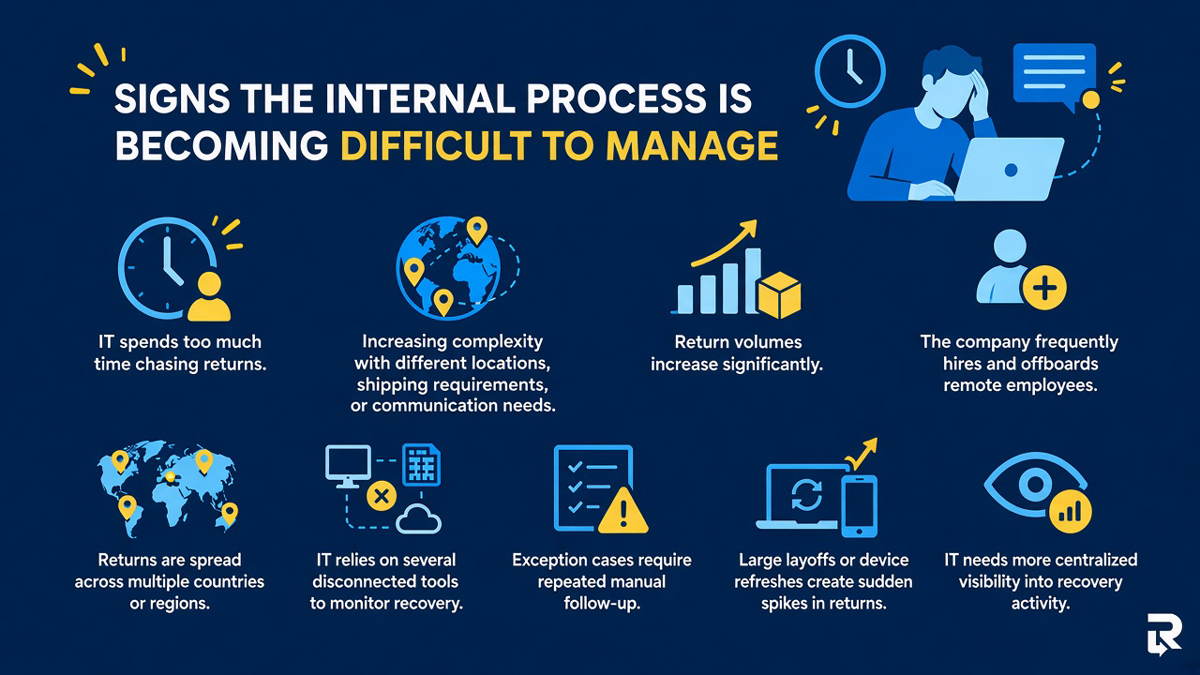
Outsourcing may also become worth considering when:
- Return volumes rise drastically.
- The company routinely brings on and fires remote workers.
- The laptops are distributed over several countries and/or regions.
- The IT team has a number of fragmented tools for monitoring recovery.
- Exception cases need to be followed up manually several times.
- Changes in the number of returns tend to spike when there are larger layoffs, or refreshing devices.
- The IT team should get better centralized visibility of recovery activity.
For instance, a process that’s relatively easy for 10 returns per month could be a problem if the organization is suddenly inundated with hundreds of devices for recovery..
A Simple Decision Framework for IT Managers
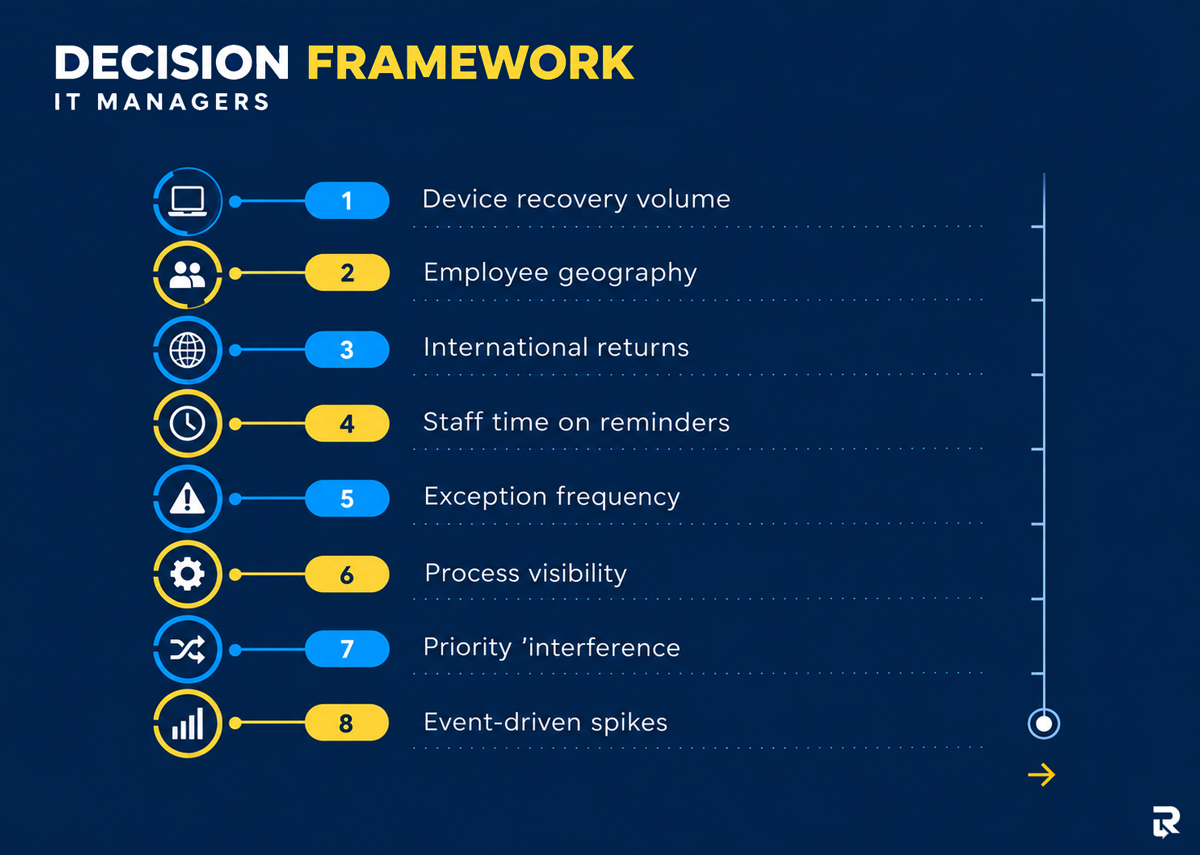
Before changing the recovery model, IT managers can look at a few practical questions:
- How many devices do we recover each month?
- Where are employees located?
- How many returns are international?
- How much staff time goes into reminders and tracking?
- How often do returns become exceptions?
- Can the current process provide sufficient visibility?
- Does recovery interfere with other IT team priorities?
- Does return volume change during certain events?
Look at both the normal volume and occasional spikes.
A geographically concentrated workforce may be easier to support internally than a highly distributed one.
Cross-border recovery can require more coordination than standard domestic returns.
Include the time spent handling follow-ups, status checks, and exceptions.
Frequent delays, missing devices, damaged equipment, or unreachable employees can increase the workload.
The IT team should be able to determine which devices have been requested, shipped, received, or still require action.
If equipment returns regularly compete with higher-priority technical work, the operational cost deserves attention.
Acquisitions, layoffs, office closures, and large device refreshes can create temporary increases that the normal process may not handle comfortably.
The answers provide a more useful basis for the decision than simply looking at the number of employees.
What Should IT Teams Evaluate Before Outsourcing?
When deciding to outsource a professional laptop retrieval service like Remote Retrieval, it’s not just about the cost of shipping. The IT team should be clear what the provider will take care of and what will continue to be the responsibility of the company.
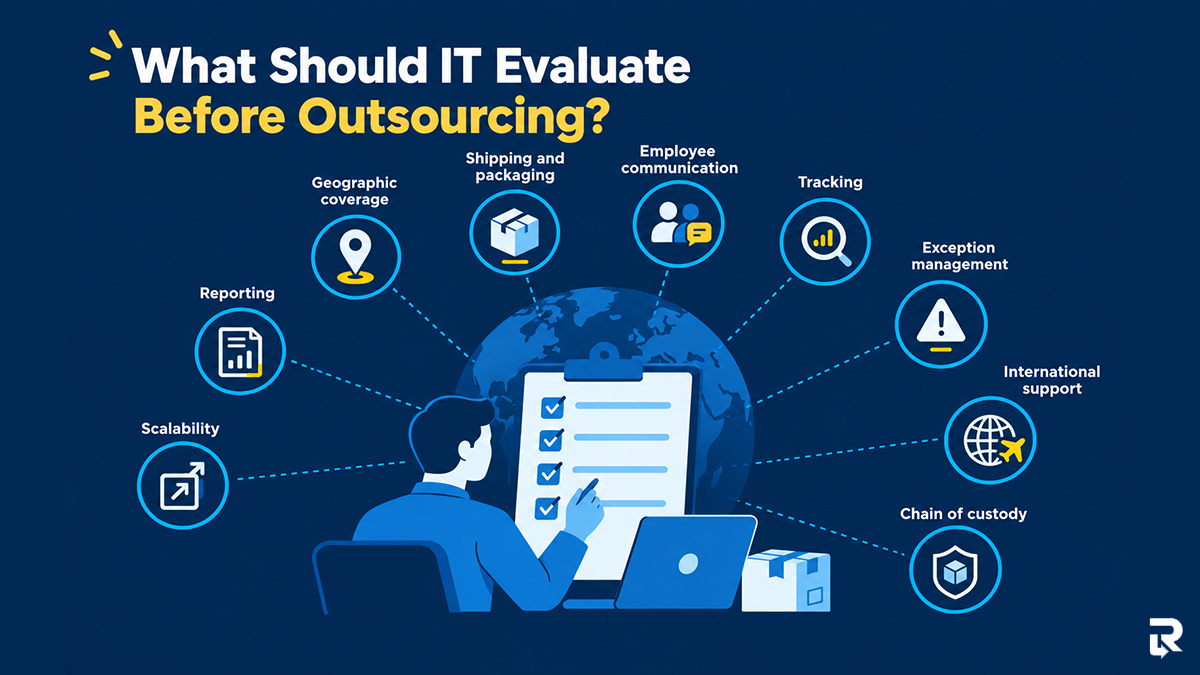
Important areas to evaluate include:
- Geographic coverage: Does the provider have the capacity to provide service at the school’s sites?
- Shipping and packaging: Does it offer appropriate return materials and co-ordinates shipments.
- Employee communication: who gives directions and checks up on unreturned items?
- Tracking: Is the IT team able to track the status of each recovery?
- Exception management: What to do in case an employee misses a deadline or a shipment is delayed?
- International support: Is it possible to co-ordinate returns across borders?
- Chain of custody: Does there exist clear documentation of recovery of the device?
- Reporting: Is there useful recovery/asset information available to IT?
- Scalability: Will the service work during a surge of activity as well as during typical use?
These questions assist the IT team in deciding if outsourcing would really resolve operational issues that they are currently having.
Ready to Outsource?
DIY vs. Outsourcing: The Decision Comes Down to Operations
DIY retrieval can be viable with controlled volumes and logistics and provide companies with control over the process.
When outsourcing, a lot of the coordination is delegated to a specialist supply chain provider. This can be more feasible if the employees are spread out, volumes returned regularly fluctuate, international recovery is frequent, or the logistics time within the organization is considerable.
In both situations you want the same thing: a consistent and repeatable process for the recovery of company equipment to avoid unnecessary work for IT.
Organizations that choose to outsource could have a provider like Remote Retrieval manage the logistical aspects of recovering the equipment and let their internal staff handle the oversight of assets and policy.